


Pacific Talanoa Strengthens NGO Partnerships for Sustainable Tourism and Environmental Stewardship
19 December 2025
Samoa Strengthens Culinary Tourism through Regional Collaboration and Capacity Building
19 December 2025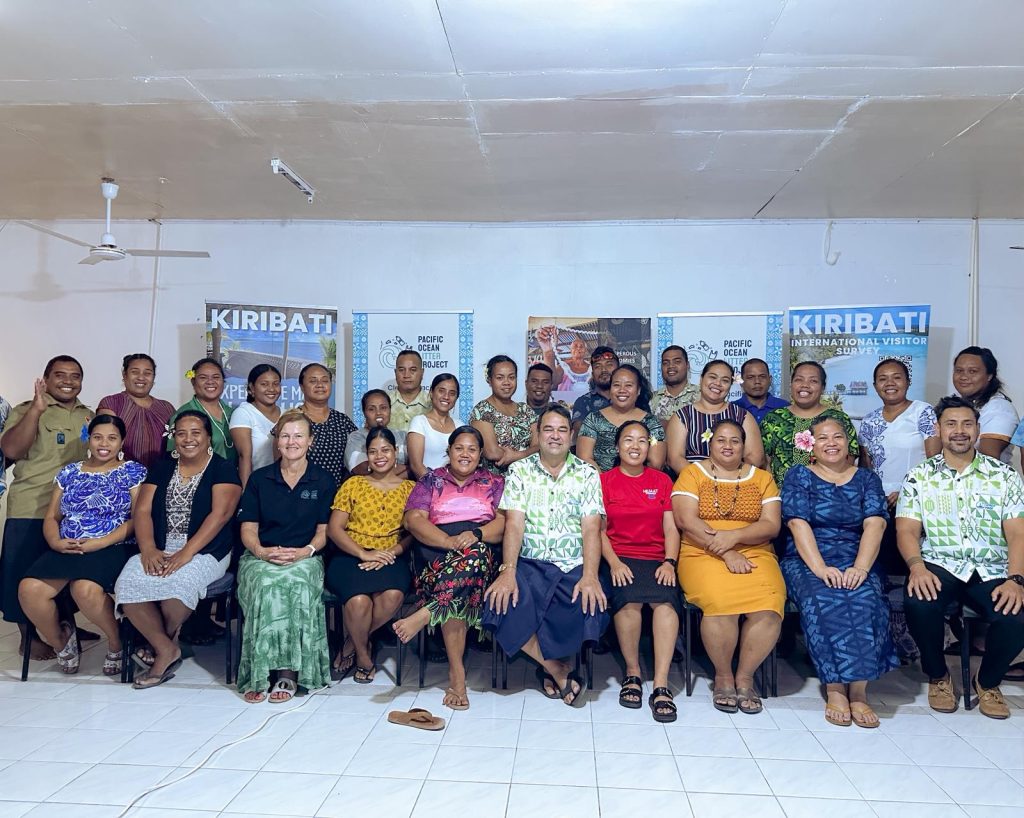
On 12 November, the Pacific Tourism Organisation (SPTO), the Secretariat of the Pacific Regional Environment Programme (SPREP), and SWITCH-Asia co-designed and co-delivered an integrated Pacific Ocean Litter Project (POLP) and Sustainable Tourism Enhancement in the Pacific (STEP II) workshop. The event brought together 25 participants from government agencies, the private sector, and non-government organisations, including representatives from the Tourism Authority of Kiribati (TAK) and the Ministry of Environment, Land, Agricultural Development (MELAD).
The workshop provided a platform to introduce the Standards and Certification Program (SCP) for phasing out Single Use Plastics (SUPs) in the Pacific tourism industry, alongside the STEP II Project, which promotes circular economy principles and sustainable resource management across the tourism value chain. TAK’s Mauri Mark standards were presented as a national benchmark, while MELAD highlighted programmes under the Waste Management and Pollution Prevention Section (WMPPS), including plastics repurposing trainings, clean-up campaigns, garbage collection initiatives, partnerships with local recycling facilities, and the innovative Plastic-Seedling Exchange Program. These efforts were contextualised within Kiribati’s Sustainable Tourism Policy and Action Plan..
SPTO delivered a comprehensive overview of the Pacific Sustainable Tourism Policy Framework, the Pacific Sustainable Tourism Standards (PSTS), and the SCP’s three components, while SPREP outlined POLP’s targeted activities for the tourism sector and linkages to broader project interventions including policy reforms and regional commitment for a global treaty to address plastics pollution. SWITCH-Asia introduced STEP II, emphasising the importance of effective resource management practices across the tourism value chain. Together, these initiatives underscore the region’s commitment to embedding sustainability into tourism development.
An interactive waste audit exercise was piloted during the workshop, recognising the participation of tourism operators from Tarawa and the outer islands. The tool was further tested at five businesses during site visits, assessing the types of SUPs in use, identifying sustainable practices already in place, and documenting problematic products that strain the environment and waste management infrastructure. Results revealed that PET bottles remain the most common SUP used by tourism businesses due to water quality concerns, while plastic bags are widely used as bin liners, with green bags used for garbage collection. Plastic straws and cups are moderately used, particularly for cold beverages and coconuts, though quality paper straws are unavailable locally. Aluminium foil is frequently preferred over cling films for food packaging, and plastic cutlery is used in some accommodations to supplement stainless steel when catering for large groups. Paper-based takeaway containers are emerging but remain uncommon. Other items such as disposable gloves, paper cups with plastic lids, hair nets, food packaging, cleaning chemical containers, shower caps, and miniature toiletries were also identified as prevalent.
The STEP II session introduced participants to the concept of a circular economy, which is simplified as better resource management through the choice of products with longer lifespans, the conservation of water and energy, and the reduction of waste at the source. Attendees acknowledged that banning problematic non-essential SUPs through legislative reform is the most effective intervention, with SPREP working alongside the government to advance such measures. Participants actively identified products within accommodation properties that could be replaced with environmentally friendly alternatives, with some noting the importance of beginning these practices at home. The session concluded with a consensus that reducing plastic pollution through sustainable purchasing choices is both economically viable and environmentally beneficial in the long term.
Despite strong momentum, several barriers to adopting sustainable alternatives were noted. These include the lack of locally available alternatives, limited awareness and motivation to adopt greener practices, high costs of switching in the short term, and the absence of strong national policy reforms. Participants also highlighted gaps in support and information, noting that there is currently no systematic mechanism to access incentives for green alternatives, nor sufficient information on suppliers and available products.
The workshop outcomes reaffirm Kiribati’s commitment to advancing sustainable tourism through SCP and STEP II, embedding circular economy principles into its Country Pathway. By addressing SUPs, strengthening waste management, and promoting resource efficiency, Kiribati is positioning its tourism sector as a driver of environmental stewardship and sustainable livelihoods.


