Pacific Tourism Organisation – 2025 Annual Report
13 May 2026
Fiji Secures Bid to Host South Pacific Tourism Exchange 2027
18 May 2026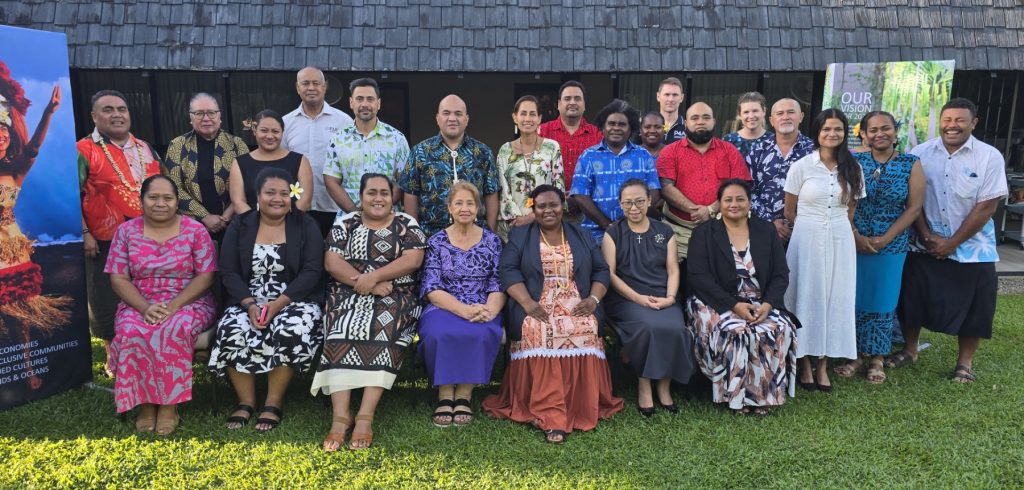
Last week, the Pacific Tourism Organisation (SPTO) Board of Directors was updated on the progress of the Review of the Regional Architecture (RRA) during its meeting in Nadi, as part of ongoing regional dialogue on institutional arrangements within the Pacific.
The Board valued the update presented by Esala Nayasi, Deputy Secretary General of the Pacific Islands Forum Secretariat, who briefed the Board on the current status of discussions under the RRA process and outlined ongoing consultation efforts across the region.
The Board also reviewed SPTO’s newly launched industry advocacy video and noted the findings of the RRA Industry Survey report and stakeholder engagement process. These inputs reflected strong industry perspectives on the importance of maintaining a focused and stand-alone regional mechanism for tourism to support coordination, advocacy, and sector development across the Pacific. Both the video and report were approved by the Board to be shared to the stakeholders.
The advocacy campaign forms part of SPTO’s contribution to regional discussions on the future of tourism governance within the evolving regional architecture. It highlights the importance of ensuring that tourism, one of the Pacific’s key economic sectors, continues to be effectively supported through dedicated regional coordination and technical engagement.
Tourism in the Pacific is inherently private sector-driven, and the importance of industry participation is reflected in SPTO’s governance structure, which incorporates private sector representation at both the Council of Tourism Membership and Board of Directors levels. This inclusive approach ensures that market-driven insights and industry perspectives are effectively integrated into regional decision-making processes.
In this context, the Board also noted that tourism holds a level of regional importance comparable to other key sectors, such as fisheries, which benefit from dedicated regional institutional arrangements. The Board highlighted the value of ensuring that both
sectors are supported through appropriately focused and specialised mechanisms to effectively address their respective priorities and contributions to Pacific economies.
The Board reaffirmed its commitment to continued engagement and coordination as regional discussions on the future architecture progress, ensuring that tourism perspectives are effectively represented throughout the process.
Tourism remains a vital contributor to Pacific economies, supporting livelihoods, businesses, government revenue, and community development across the region. The current engagement process highlights strong industry perspectives on the importance of maintaining effective regional coordination for tourism, particularly in areas such as sustainability, climate resilience, connectivity, investment, and recovery.