Pacific Tourism’s Biggest Trade Week Returns to Fiji For SPTE and FTE 2027
30 June 2026
South Pacific Pocket Guide Launches VanuatuPocketGuide.com, the Largest Travel Guide Ever Written for Vanuatu
10 July 2026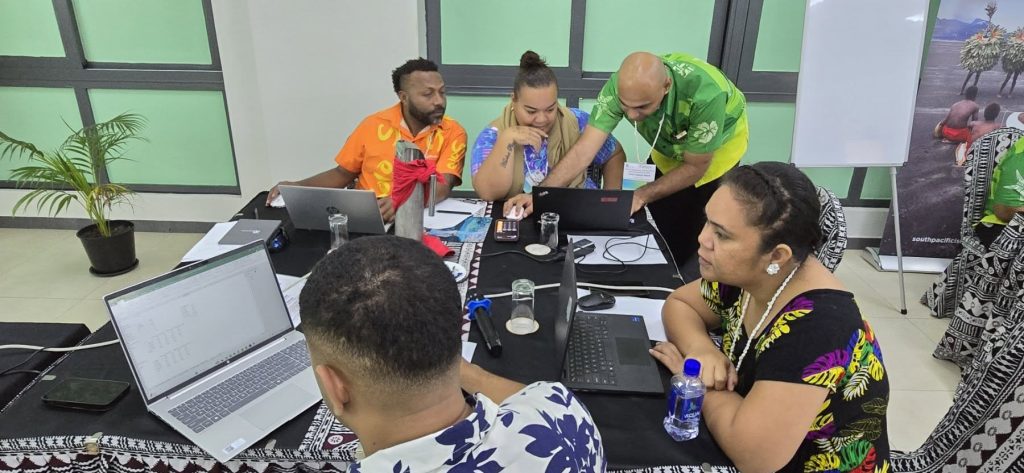
The Pacific Tourism Organisation (SPTO) completed its five-day Pacific Tourism Data Initiative (PTDI) Regional Capacity Building Workshop funded by New Zealand, equipping tourism research and statistics officers from across nine Pacific Island Countries under the Pacific Tourism Data Initiative (PTDI) programme with advanced analytical skills to strengthen evidence-based tourism planning and decision-making.
Held in Nadi from 29 June to 3 July, the workshop brought together 11 tourism professionals from Kiribati, Cook Islands, Niue, Papua New Guinea, Samoa, Solomon Islands, Timor-Leste, Tonga and Vanuatu. Participants received intensive, hands-on training in statistical analysis using SPSS, qualitative research using NVivo software, tourism report writing and data interpretation, enabling them to transform tourism survey data into actionable insights that support national tourism development.
The workshop marked the final regional capacity-building activity under the New Zealand Ministry of Foreign Affairs and Trade (NZMFAT)-funded Pacific Tourism Data Initiative (PTDI), which concludes in September 2026. Since its inception, PTDI has transformed the way participating Pacific Island countries collect, analyse and use tourism data, establishing stronger national tourism information systems through the implementation of International Visitor Surveys (IVS), Business Confidence Index (BCI) surveys and Community Attitudes Surveys (CAS). These datasets have become an essential resource for governments and national tourism organisations, supporting evidence-based policy development, destination marketing, investment planning and sustainable tourism management.
Throughout the week, participants worked with real tourism datasets, strengthening their ability to identify visitor trends, undertake market segmentation, analyse visitor expenditure, interpret qualitative feedback and produce analytical reports aligned with international best practice. The workshop also provided an important platform for peer learning, with participants sharing experiences, challenges and innovative approaches to tourism data collection and analysis within their respective destinations.
SPTO Chief Executive Officer Christopher Cocker said that as the programme draws to a close, an independent evaluation has reaffirmed PTDI’s value and impact across the region. Participating countries acknowledged the significant progress made in strengthening their technical capabilities while also highlighting the need for continued regional collaboration and technical support to fully embed these systems and ensure the long-term sustainability of tourism data programmes.
“One of the biggest challenges we continue to face across the Pacific is the lack of consistent, high-quality tourism data to support informed decision-making. In today’s rapidly changing tourism landscape, decisions on marketing, investment, infrastructure and policy cannot be based on assumptions—they must be backed by credible evidence. Simply put, data is king. The Pacific Tourism Data Initiative has fundamentally changed the region’s tourism data capability. It has equipped our member countries with the skills, systems and confidence to collect, analyse and interpret tourism data that directly informs national planning and strengthens the resilience of the tourism sector. More importantly, PTDI has invested in people, building a network of skilled tourism researchers and analysts who will continue to drive evidence-based decision-making across the Pacific, Cocker said.
Cocker mentioned that access to reliable tourism intelligence remains one of the Pacific’s greatest challenges and one of its greatest opportunities.
“This final regional workshop is not the end of the journey—it is the beginning of the transition to national ownership. While countries have made significant progress, the evaluation clearly shows there is still a strong need for continued technical support and regional collaboration to consolidate these gains. Tourism is one of the Pacific’s most dynamic and vulnerable industries, influenced by global economic shifts, geopolitics, climate events and changing visitor behaviour. Continued investment in initiatives like PTDI will be critical to ensuring Pacific destinations can respond to these challenges with confidence, adapt to emerging trends and plan for a resilient and sustainable tourism future. The success of PTDI demonstrates what can be achieved through long-term regional partnerships. Sustaining this momentum will ensure Pacific governments continue to have access to the reliable tourism intelligence needed to make smarter decisions, strengthen destination competitiveness and maximise tourism’s contribution to economic development and community wellbeing.”
Mr Cocker said the workshop reflects SPTO’s long-term commitment to building sustainable institutional capacity throughout the region.
“The Pacific has made significant progress over the past several years in strengthening tourism intelligence. The knowledge gained through this programme will continue to benefit national tourism organisations, ensuring that decisions are informed by credible evidence and that tourism growth is planned in a way that delivers lasting economic and community benefits.”
Helen Aumae, Team Leader – Digital and Research at Tourism Solomons Office, said the practical nature of the workshop had been invaluable.
“This workshop has strengthened our understanding of how to turn tourism data into meaningful information that supports better planning and decision-making. The hands-on sessions have given us practical skills that we can immediately apply in our work, while also providing an opportunity to learn from colleagues across the Pacific.”
As PTDI transitions towards completion, workshop participants will continue serving as national research champion focal points, helping sustain tourism data collection, analysis and reporting within their respective countries and supporting a stronger culture of evidence-based tourism development across the Pacific.