


Pacific Tourism Organisation Boosts Data Capacity with Vanuatu Tourism and Tourism Solomons through Online Refresher Training 2026
17 March 2026
Kiribati International Visitor Survey Highlights Tourism Value and Opportunities for Sustainable Growth
17 March 2026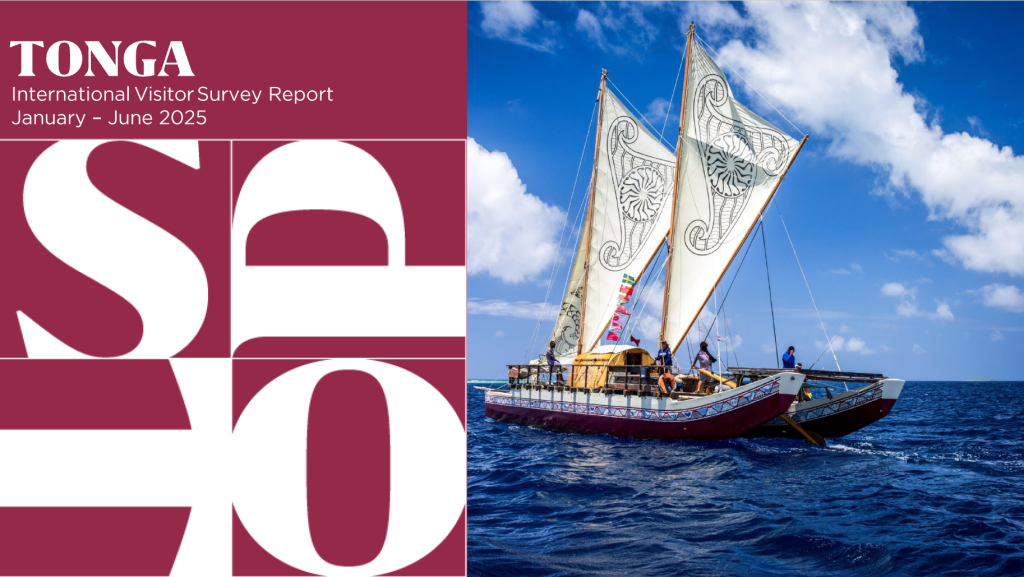
The Pacific Tourism Organisation (SPTO), in collaboration with the Ministry of Tourism Tonga and the Tonga Tourism Authority, has released the Tonga International Visitor Survey (IVS) Report for January to June 2025, providing a comprehensive snapshot of visitor behaviour, spending patterns, motivations, and satisfaction levels. The findings offer critical evidence to support Tonga’s tourism planning, investment decisions, and sustainable destination development.
Tonga is one of ten Pacific Island countries participating in the PTDI alongside the Cook Islands, Kiribati, PNG, Niue, Solomon Islands, Samoa, Vanuatu, Timor-Leste, and FSM-Yap. The New Zealand Government-funded initiative includes three core surveys—the bi-annual International Visitor Survey (IVS), annual Business Confidence Index (BCI), and annual Community Attitude Survey (CAS)—all designed to help Pacific nations better understand and shape the impact of tourism.
Data for the survey was collected between February and April 2025, generating 88 valid responses from 543 invitations issued, representing a 16 percent response rate and approximately 1.5 percent of total visitor arrivals during the collection period. While data for January, May, and June were not captured due to operational constraints, full six-month arrival figures were used to estimate overall economic impact, ensuring the findings remain indicative of broader trends.
The report estimates that visitors to Tonga generated approximately USD 24 million in economic impact between January and June 2025. Average visitor expenditure reflects meaningful contributions across accommodation, food and beverage, transport, and tourism activities. Visitors spent an average of USD 1,055 per person on prepaid expenses and USD 586 per person while in-country, resulting in a total average spend of USD 1,009 per trip. Approximately 40 percent of prepaid expenditure is estimated to have flowed directly into the local economy.
With an average length of stay of 6.8 nights, visitors spent around USD 148 per person per day, reinforcing tourism’s role as a significant driver of local business activity. The visitor
profile shows that Tonga continues to attract a high proportion of first-time visitors, with 60 percent visiting the country for the first time and nearly half travelling solo. Average household income among respondents was USD 76,405, indicating strong purchasing potential within key market segments.
New Zealand remained Tonga’s largest source market, accounting for 35 percent of visitors, followed by Australia at 19 percent, the United States at 16 percent, and Europe at 14 percent. Holidays were the primary reason for travel at 49 percent, followed by business travel at 21 percent and visiting friends and relatives at 19 percent. Tongatapu remained the most visited destination, with 93 percent of respondents spending time there, while Vava’u and Ha’apai attracted 16 percent and 4 percent respectively.
The findings show that visitors were strongly drawn to Tonga’s culture, natural environment, and authentic island experience. Travel planning cycles were relatively short, with more than one-third of respondents planning their trip less than one month before departure. Digital platforms played a notable role in travel planning, with 39 percent of visitors using at least one online channel, including social media and online travel platforms, to inform their decisions.
Visitor satisfaction levels were highest for the friendliness of local people, personal safety, and overall visitor experience. Areas receiving lower satisfaction scores included public transport, shopping experiences, and internet availability. Respondents also identified opportunities to further enhance the visitor experience, including upgrades to public infrastructure and tourism facilities, improved waste management and cleanliness, expanded transport options and clearer inter-island travel information, better customer service and restaurant offerings, more accessible tourist information and signage, and addressing concerns related to stray dogs and environmental care.
Despite these challenges, overall sentiment toward Tonga as a destination remained positive. Nearly four out of five visitors indicated they would recommend Tonga to others, while more than 80 percent said they would consider returning in the future.
SPTO Chief Executive Officer Christopher Cocker mentioned, “Reliable tourism data is fundamental to informed decision-making across the Pacific. The Tonga IVS demonstrates how evidence can be used to strengthen destination planning, improve visitor experiences, and support targeted investment. SPTO remains committed to working alongside Tonga and our member countries to build strong, nationally owned data systems that position Pacific destinations to compete confidently and sustainably in a changing global market.”


